
How to Reduce Tension Headaches: Causes, Relief and Treatment
Tension headaches are one of the most common types of headache. They can feel like a dull ache, pressure or tightness around the forehead, temples or back of the head, and sometimes seem to come from the neck.
For some people, they happen occasionally. For others, they become a frustratingly regular part of life, particularly during periods of stress, poor sleep, long days at a computer or when the neck and upper back are feeling tight and tired. If you’re looking for practical, realistic ways to reduce a tension headache – rather than just treating each one as it comes – the good news is there’s usually more than one thing you can try.
There isn’t always one single cause of a tension headache. They can be influenced by a combination of muscle tension, stress, posture, prolonged screen use, sleep, dehydration and fatigue.
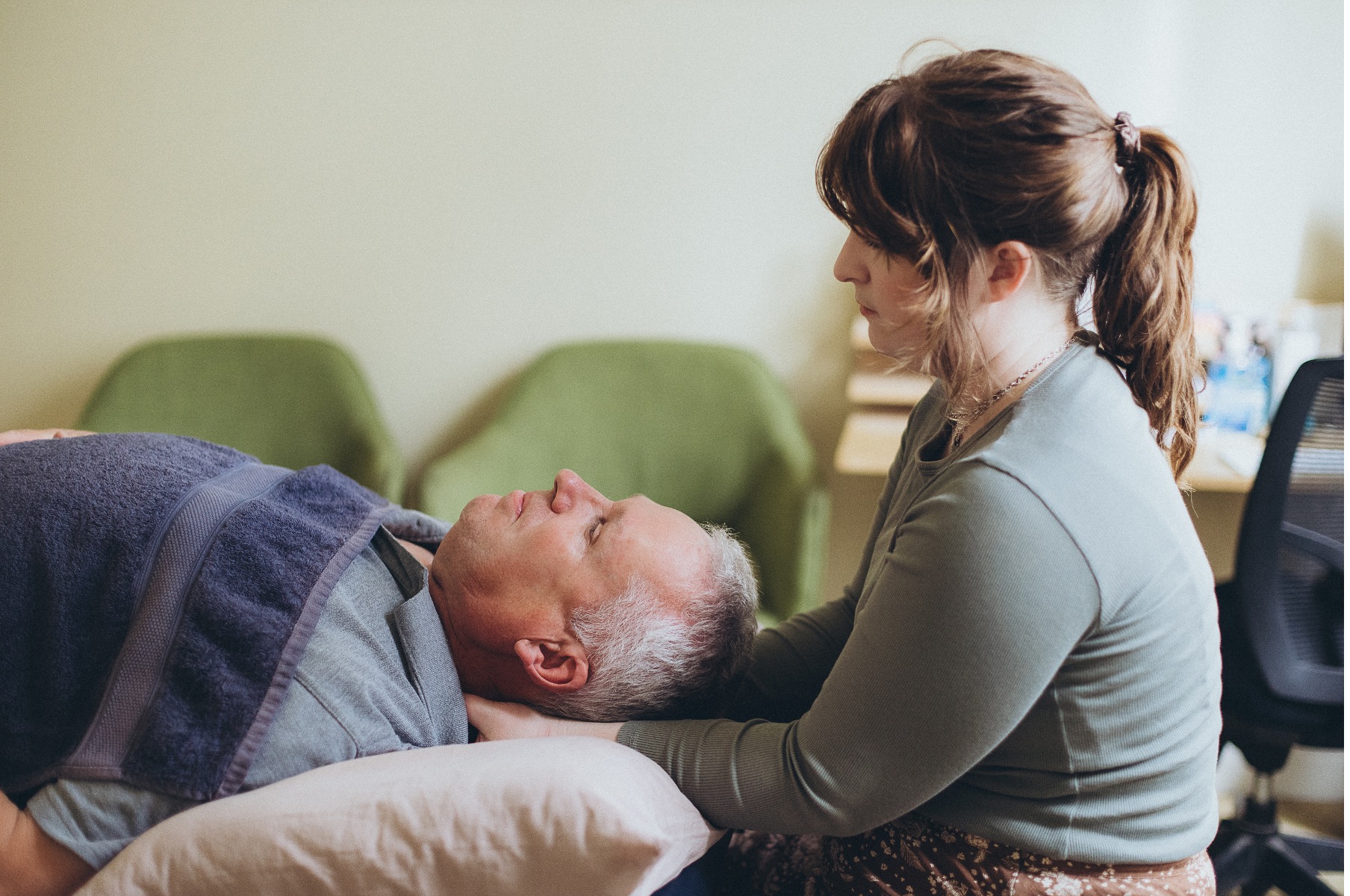
The good news is that there are several things you can try to reduce how often tension headaches occur and how much they affect you. Manual therapy, including osteopathic treatment, can be one useful part of this approach when the neck, upper back or surrounding muscles are contributing.
What does a tension headache feel like?
A tension headache usually feels more like pressure or tightening than the throbbing pain that is often associated with migraine.
You might notice:
- Pressure across your forehead
- Tightness around your temples
- An ache at the back of your head
- Pain or stiffness through your neck
- Tight or tired muscles around your shoulders and upper back
- Tenderness around the base of your skull
- Headaches that develop towards the end of the working day
- Headaches after prolonged computer or phone use
Some people also notice jaw tension or teeth clenching, particularly during stressful periods.
What causes tension headaches?
Tension headaches don’t necessarily have one identifiable cause. Often there are several contributing factors.
Neck and upper back tension
The muscles around your neck, shoulders and upper back can become more sensitive when they are working for long periods without much variation. This is particularly common if you spend much of your day at a computer, working from a laptop, driving or doing other tasks where your head and arms stay in a relatively fixed position. It’s a pattern that shows up a lot in our neck and shoulder pain patients too – the two often go hand in hand.
It doesn’t necessarily mean your posture is “bad”. Staying in one position for a long time is often more important than finding the perfect posture.
Stress
Stress can change the way we hold our bodies without really noticing it.
You might shrug your shoulders, clench your jaw, tighten your neck muscles or spend less time moving around. Stress can also affect sleep, which may make headaches more likely.
If your headaches seem to arrive during busy or stressful periods, this may be an important part of the picture.
Screen time
Long periods looking at a computer, tablet or phone can contribute to headaches, particularly when combined with prolonged sitting and reduced movement.
This doesn’t mean that screens are inherently harmful. It is more about the combination of visual concentration, fixed posture and not taking enough breaks.
Sleep and fatigue
Poor sleep, changes to your normal sleep pattern and general fatigue can all contribute to headaches.
If your headaches have recently become more frequent, it is worth considering whether anything has changed with your sleep, workload, exercise, stress or daily routine.
Hydration
Being dehydrated can contribute to headaches for some people. This is particularly relevant if you’re exercising, working in a warm environment or simply getting busy and forgetting to drink.
You don’t need to constantly monitor your water intake, but making sure you’re drinking regularly throughout the day is a simple thing to check.
How to reduce tension headaches
There isn’t one exercise, stretch or treatment that works for everyone. Often, a combination of relatively simple changes is most useful.
Take regular screen breaks
If you work at a computer, try to break up long periods of uninterrupted screen time.
Stand up, walk around, look away from the screen and change your position. Even brief breaks can give your eyes, neck and shoulders a chance to do something different.
You don’t necessarily need a complicated stretching routine every hour.
Change your posture regularly
Rather than trying to maintain one “perfect” posture all day, aim for postural variety.
You might:
- Change your sitting position
- Alternate between sitting and standing
- Move your screen or keyboard if they are poorly positioned
- Take short movement breaks
- Avoid spending several hours in exactly the same position
Your body is designed to move. Being in a good position for eight hours isn’t necessarily better than being in a reasonable position and changing it regularly.
Stay hydrated and eat regularly
If you’re prone to headaches, make sure you’re drinking regularly and not routinely skipping meals.
This is particularly relevant during busy workdays when it’s easy to get to 3pm and realise you’ve had two coffees and very little water or food.
Look at stress and recovery
If your headaches are worse during stressful periods, simply treating the neck may not address everything that is contributing.
Consider whether you’re getting enough sleep, taking breaks during the day, exercising regularly and having some time away from work and screens.
You don’t need to remove all stress from your life – that isn’t realistic. But finding ways to recover from it can make a difference.
Try some gentle neck movement
If your neck feels stiff, gentle movement can be useful.
You could try slowly turning your head from side to side, looking up and down, or gently moving your shoulders through their comfortable range.
The aim is movement rather than forcing a stretch. If something consistently makes your headache worse, it isn’t necessarily the right exercise for you.
If tension headaches are a regular part of your week, get in touch – we can help you work out what’s driving them.
How can osteopathy help tension headaches?
Manual therapy is one option for managing tension headaches, particularly when neck, upper back or muscular factors seem to be contributing.
When someone comes to Ferguson Street Osteopathy with headaches, we don’t just treat the head. We look at the neck, upper back, shoulders and the jaw, as well as what you are doing during the day that might be contributing.
Depending on what we find, osteopathic treatment may involve gentle hands-on techniques to the neck, upper back, shoulders and surrounding muscles.
This may help reduce pain and improve comfortable movement. However, hands-on treatment shouldn’t be the entire solution.
If your headaches keep returning after a long day at your computer, for example, treatment may settle the symptoms but we’d also want to look at why your neck is becoming irritated during the working day.
That might mean changing your workstation, taking more screen breaks, improving strength or movement, addressing jaw tension, or simply changing how you pace your day.
For some people, manual therapy is useful. For others, exercise and lifestyle changes are more important. Often, a combination works best.
What exercises are good for tension headaches?
There isn’t one exercise that everyone with tension headaches needs to do.
Depending on the individual, exercises might include:
- Gentle neck mobility
- Deep neck flexor exercises
- Upper back strengthening
- Shoulder blade strengthening
- Thoracic mobility exercises
- Postural endurance exercises
- Exercises to improve tolerance to prolonged desk work
The important thing is that the exercise matches the reason you’re getting headaches.
Someone who spends eight hours at a computer may need a different approach from someone whose headaches are associated with gym training, jaw clenching or periods of high stress.
Frequently asked questions about tension headaches
How can I reduce a tension headache?
There are several things you can try, including gentle movement, taking a break from screens, drinking some water, eating if you’ve missed a meal and addressing neck, shoulder or jaw tension.
If headaches are happening frequently, it is worth looking at the broader pattern rather than simply treating each headache when it appears.
Can poor posture cause tension headaches?
Posture can contribute, but it is unlikely to be as simple as having one “bad” posture that causes your headaches.
More often, headaches can be associated with spending long periods in the same position without enough movement or variation.
Rather than trying to sit perfectly upright all day, aim to change position regularly and build your tolerance for different positions.
Can dehydration cause tension headaches?
Dehydration can contribute to headaches in some people. If you’re getting regular headaches, make sure you’re drinking enough throughout the day, particularly when exercising or in hot weather.
Can screen time cause tension headaches?
Long periods of screen use may contribute, particularly when you’re concentrating for hours without taking breaks and remaining in the same neck and shoulder position.
Regular screen breaks and changing your position throughout the day are simple things to try.
Can stress cause tension headaches?
Stress can contribute to tension headaches and may also affect sleep, muscle tension and activity levels.
If headaches are closely linked with stressful periods, addressing stress and recovery may be just as important as treating the neck.
Can osteopathy help tension headaches?
It can be useful for some people, particularly when neck, upper back or muscular factors are contributing.
At Ferguson Street Osteopathy, we combine hands-on treatment with exercises and practical advice rather than relying on manual therapy alone.
When should I see a doctor about a headache?
Most tension headaches are not dangerous, but a new, severe or unusual headache should be assessed appropriately.
Seek urgent medical attention for a sudden and extremely severe headache, or a headache accompanied by new neurological symptoms, significant confusion, fainting, seizures, fever with neck stiffness, or following a significant head injury.
It is also worth speaking with your GP if your headaches are becoming more frequent, changing in character or significantly interfering with your normal life.
Getting help with tension headaches in Melbourne’s inner west
Tension headaches can be frustrating, particularly when they keep returning despite stretching, massage or pain medication.
Sometimes the most useful approach is to step back and look at the bigger picture: your neck and upper back, how you work, how much time you spend looking at screens, your sleep, hydration, stress and your general activity levels.
At Ferguson Street Osteopathy in Williamstown, we regularly see people with tension headaches and associated neck and upper back pain. We can use hands-on osteopathic treatment where appropriate, while also helping you work out what might be contributing to the headaches and what you can do between appointments.
If you’re experiencing regular tension headaches in Melbourne’s inner west, we’d be happy to help.
Book online for a hands-on assessment, no referral needed – or get in touch first if you have questions.

About the author
Julie Hjorth is the Principal Osteopath at Ferguson Street Osteopathy in Williamstown, with over 15 years of experience. She holds a Master of Osteopathy and is an accredited Advanced Paediatric Osteopath through Osteopathy Australia, specialising in infants, pregnancy, postnatal care, and chronic health conditions.