
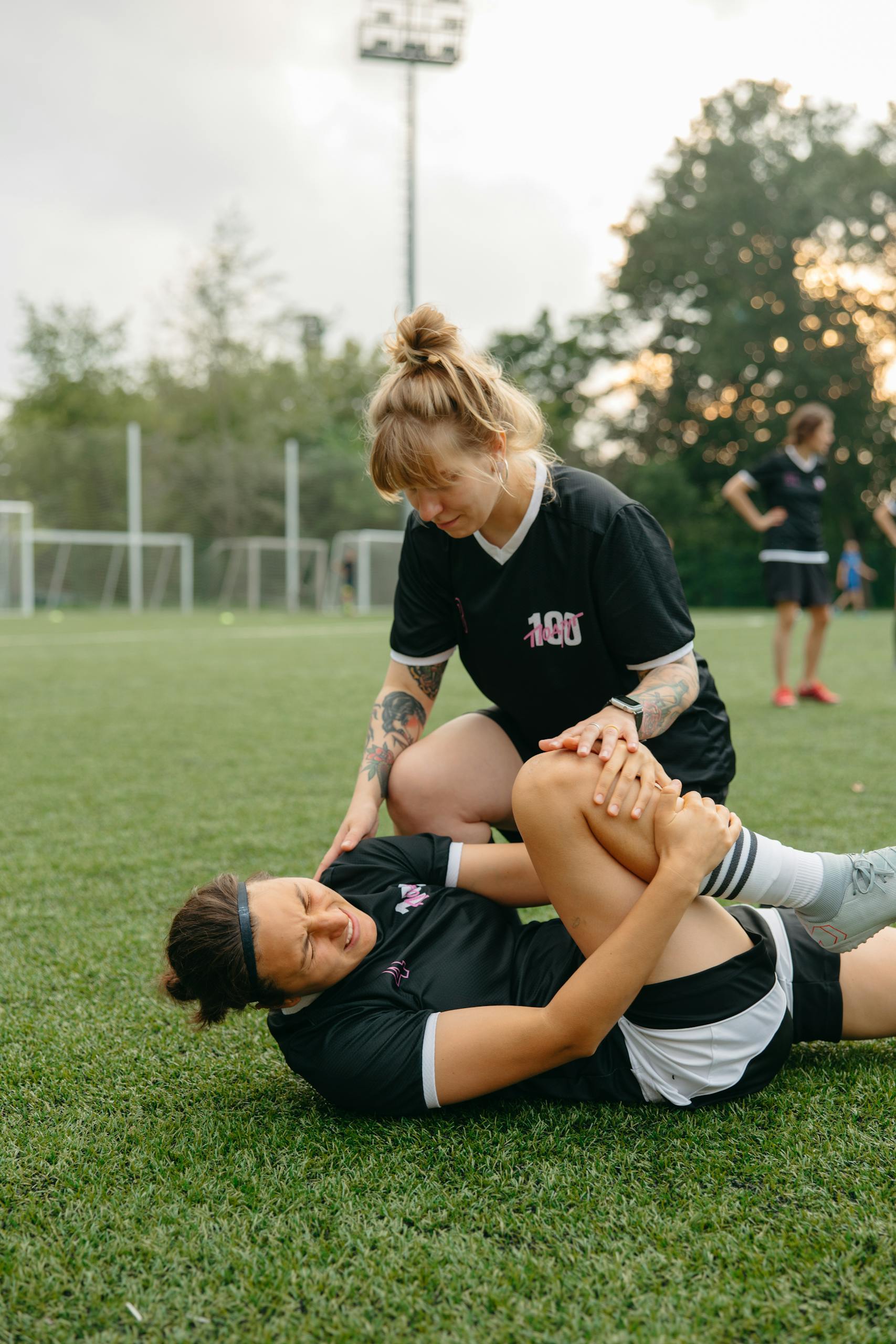
Sports Injury Management: Why RICE is Out and PEACE & LOVE is In
Rolled your ankle during a run? Strained a muscle at training? Proper sports injury management in the first 48 hours can make the difference between a quick recovery and months of setbacks.
For decades, the RICE protocol (Rest, Ice, Compress, Elevate) has been standard sports injury management advice. But evidence now shows it may actually delay your recovery. At Ferguson Street Osteopathy in Williamstown, we use evidence-based sports injury management protocols to help you recover faster and return to activity safely.
Here’s what’s changed and why it matters for your recovery.
What is Sports Injury Management?
Sports injury management is the immediate and ongoing treatment of acute injuries – typically soft tissue injuries less than 6 weeks old affecting muscles, ligaments, or tendons.
Common acute sports injuries include:
- Ankle sprains – rolled or twisted ankle
- Muscle strains – hamstring, calf, groin pulls
- Ligament injuries – knee or ankle ligament tears
- Shoulder injuries – rotator cuff strains
- Tendon issues – Achilles tendinopathy, tennis elbow
When soft tissue gets injured, your body responds with inflammation – pain, swelling, redness, warmth, and loss of function. Traditional sports injury management focused on suppressing this inflammation. That was the problem.
Why RICE Doesn’t Work for Sports Injury Management
The RICE protocol first appeared in 1978. Interestingly, its creator Dr Gabe Mirkin redacted his support for RICE almost 10 years ago – but the outdated advice persists.
The Inflammation Problem
We now understand inflammation is essential for healing. It floods your injured area with the resources needed to rebuild tissue. Anti-inflammatories (ice, medications, creams) delay this natural process.
Research shows:
- Ice reduces pain
- Ice doesn’t delay healing
- Compression and elevation feel supportive, but don’t improve tissue repair
- Complete rest slows waste clearance (your lymphatic system needs movement)
Should You Still Use Ice?
Ice can help manage pain in the first 48 hours, but understand the trade-off:
- Short-term pain relief
- Potentially slower healing
For acute sports injury management, brief ice use (15 minutes, not directly on skin) is low-risk if pain is your priority. Just don’t expect it to speed recovery.
PEACE & LOVE: Evidence-Based Sports Injury Management
The new sports injury management protocol is PEACE & LOVE – less catchy, more effective.
First 1-3 Days: PEACE
P – Protect – Avoid activities that increase pain
E – Elevate – Higher than your heart (may help swelling)
A – Avoid anti-inflammatories – They delay tissue healing
C – Compress – Soft bandages for support (not overnight)
E – Educate – Understand your injury, be active in recovery
Days 3+ Onwards: LOVE
L – Load – Gradually increase weight-bearing as tolerated
O – Optimism – Mindset affects recovery outcomes
V – Vascularisation – Cardiovascular exercise that doesn’t hurt
E – Exercise – Active rehabilitation is the most important factor
The key difference? Modern sports injury management emphasises active recovery over passive rest.
Professional Sports Injury Management in Williamstown
While minor injuries respond well to PEACE & LOVE, professional sports injury management accelerates recovery and prevents reinjury.
When to See an Osteopath
Red flags requiring immediate medical care:
- Severe pain or deformity
- Inability to bear weight
- Numbness or tingling
- Suspected fracture
See an osteopath for sports injury management when:
- Pain not improving after 1-2 weeks
- Persistent swelling beyond initial injury
- Limited range of motion affecting daily life
- Unsure about return-to-sport readiness
- History of reinjury in the same area
Our Sports Injury Management Approach
At Ferguson Street Osteopathy, our Williamstown sports injury management includes:
Biomechanical Assessment – Identify why the injury occurred
Manual Therapy – Improve mobility, reduce compensatory patterns
Exercise Prescription – Progressive loading for safe recovery
Return-to-Sport Protocols – Sport-specific readiness testing
We work with athletes from Newport Lacrosse Club and Melbourne Open Water Swimming Club. Learn more about our sports and activity osteopathy services.
Common Sports Injuries We Manage
Ankle Sprains
The most common sports injury. Proper sports injury management prevents chronic instability.
Hamstring Strains
Prone to reinjury without progressive strengthening. We guide safe loading protocols.
Plantar Fasciitis
Common in runners. Learn what causes plantar fasciitis and treatment options.
Shoulder & Knee Injuries
Require specific rehabilitation. Poor sports injury management leads to chronic problems.
Return to Sport: When Are You Ready?
Effective sports injury management includes knowing when to return safely.
Readiness criteria:
- Full pain-free range of motion
- Strength equal to uninjured side
- Sport-specific movements pain-free
- Confidence in the injured area
- Professional clearance if required
Frequently Asked Questions
Should I ice my sports injury?
Ice reduces pain but may delay healing. Use sparingly (15 mins max) if needed for pain management, but don’t rely on it for recovery.
When can I return to sport?
Depends on severity. Minor strains: 2-4 weeks. Moderate sprains: 4-8 weeks. Severe injuries: 3+ months. Individual assessment recommended.
Can I keep training with an injury?
Yes, with modifications. Train pain-free movements and maintain fitness through alternative exercises.
How does osteopathy help sports injury management?
Manual therapy improves mobility and accelerates return to function. Exercise prescription ensures proper rehabilitation and prevents reinjury.
Get Expert Sports Injury Management in Williamstown
Need professional sports injury management? Book an osteopathy assessment at Ferguson Street Osteopathy for evidence-based treatment and return-to-sport protocols.
Call 9397 3263 to discuss your injury with our Williamstown osteopaths.

About the author
Julie Hjorth is the Principal Osteopath at Ferguson Street Osteopathy in Williamstown, with over 15 years of experience. She holds a Master of Osteopathy and is an accredited Advanced Paediatric Osteopath through Osteopathy Australia, specialising in infants, pregnancy, postnatal care, and chronic health conditions.

